Table of Content
As the world rapidly moves towards an internet-friendly era, businesses are heavily leveraging the available technologies. Website development helps companies reach a wider audience by establishing their online presence. The process becomes even more interesting and useful when you get a website developed using the designs of your choice.
Converting a static design file into a fully functional HTML5 website is one of the most effective ways to ensure your vision is brought to life online. This process allows complete design flexibility — from layout to themes and font style. All you need to do is provide your design file to a conversion service provider, and they’ll transform it into a responsive, dynamic website.
If you are looking to better understand this design-to-code process, then this blog will give you the key insights — from the basics to how agencies can benefit from offering this service.
What is the HTML5 Format?
HTML5, or Hypertext Markup Language 5, is the latest version of the HTML standard used to structure and present content on the internet. HTML5 enhances previous versions with new elements, attributes, and capabilities for building dynamic, media-rich websites. Developed by the W3C and WHATWG, HTML5 is the foundation of modern web development and supports improved browser compatibility, semantic markup, and mobile responsiveness.
About Design File to HTML5 Integration
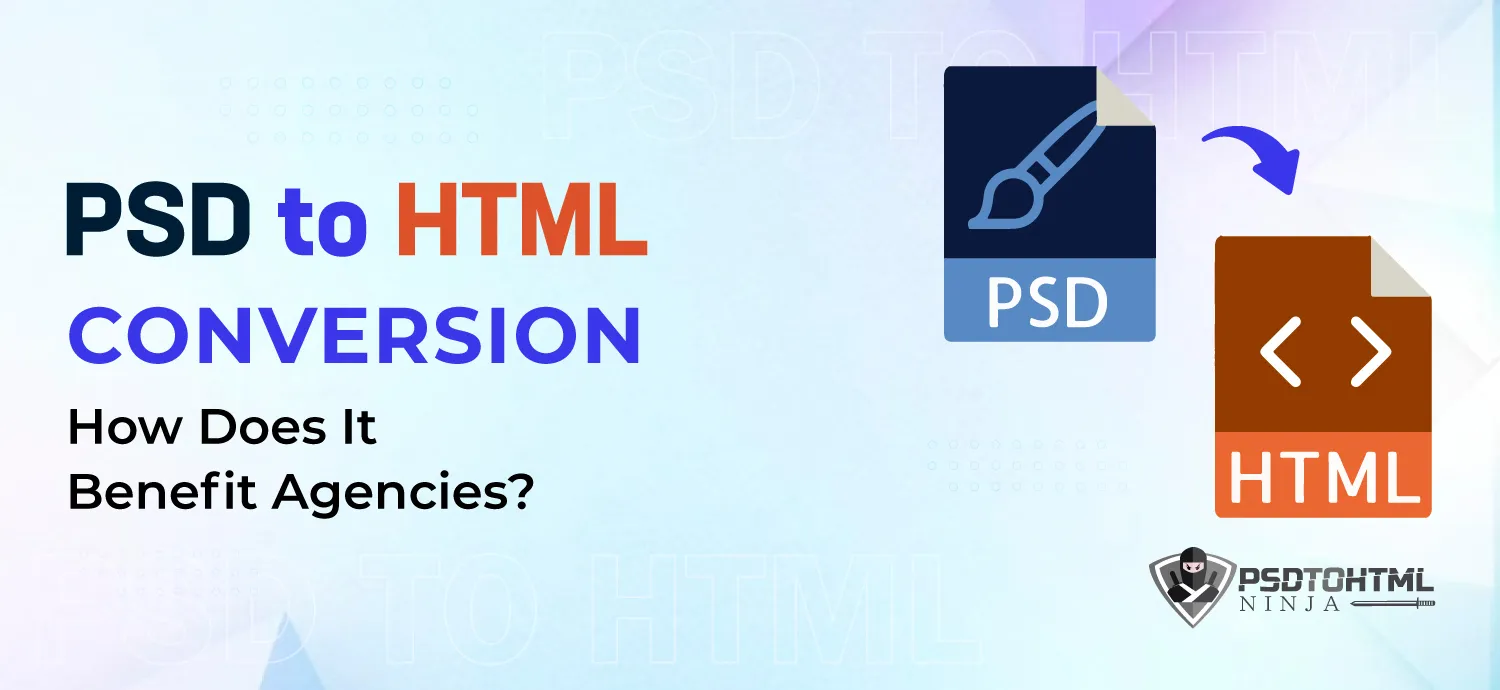
This process involves converting a design created in Adobe Photoshop (PSD format) into an interactive HTML5 website using technologies like HTML5 and CSS3. It requires analyzing and slicing the design layout, then transforming these elements into code that mirrors the original visual design.
Agencies and developers use this process to create responsive, high-performance websites from custom designs. It enables brands to retain their visual identity online without relying on restrictive templates.
Read this blog: How to Convert PSD to HTML
How Agencies Benefit from This Conversion Process
Web development agencies benefit from fast, scalable, and design-accurate workflows. Here are the main advantages:
- Cross-browser compatibility: Ensures consistent functionality across major browsers like Chrome, Safari, and Firefox.
- Responsive design: Allows the website to adapt seamlessly to desktops, tablets, and mobile devices.
- Client satisfaction: Clients appreciate when their designs are followed precisely, increasing satisfaction and retention.
- SEO-friendly output: Clean HTML5 markup improves website ranking potential.
- Timely delivery: Faster conversion enables agencies to take on and complete more projects efficiently.
- Customization options: Allows for implementing animations, transitions, and unique layouts that match the brand vision.
What Clients Look for in a Conversion Agency
When evaluating service providers for visual-to-code integration, clients prioritize:
- Work quality: Agencies must preserve the original design while converting it into a web-ready format.
- Semantic coding: Clean, structured HTML5/CSS3 code improves both user experience and long-term maintenance.
- Fair pricing: Clear, reasonable pricing structures attract more clients.
- User experience focus: Agencies should understand and apply UX principles such as logical navigation and mobile optimization.
- Attention to detail: Every element should be precisely implemented, ensuring a polished final product.
Factors That Affect Pricing
Different agencies may price this service differently. Common factors that influence cost include:
- Design complexity: Detailed or multi-layered layouts require more time and effort.
- File size: Heavier files can increase resource usage and development time.
- Animations & effects: Interactive elements require additional coding.
- Performance needs: Speed-optimized websites often involve advanced techniques and testing.
- Support & updates: Ongoing maintenance or future upgrades may increase overall project costs.
Read this: What Factors Influence the Cost of PSD to HTML?
Frequently Asked Questions
How much do you charge for converting design files to HTML5?
Pricing depends on the design file’s size, required features, responsiveness, and cross-browser compatibility. Contact us for a tailored quote.
Is HTML5 better than earlier HTML versions?
Yes. HTML5 offers enhanced support for multimedia, improved semantics, and better compatibility across devices and platforms.
How long does the conversion process take?
Timelines vary based on design complexity and team availability. Most standard projects take a few days to a couple of weeks.
How do agencies deliver top results using this method?
Agencies combine skilled teams with proven tools and workflows to deliver pixel-perfect, responsive websites on time and with high precision.
Conclusion
Converting a visual design into an HTML5 website is a powerful way to ensure branding and user experience remain consistent across platforms. Agencies offering this service provide businesses with the flexibility and customization they need in a modern website.
At PSDtoHTMLNinja, we’re equipped with the latest tools and a skilled team to transform your designs into fully functional websites. Whether it’s a PSD, Figma, or Sketch file — we’ll convert it into high-quality HTML5 code. Book a free consultation today and take your design live.
If you're looking for a reliable solution, our PSD to HTML5 conversion service ensures clean, responsive, and pixel-perfect results.

I am responsible for creating a sales funnel, attracting potential customers, and converting them into actual buyers.
Couldn't find what you were looking for?
Let us know how we can help!
Related Blog Posts